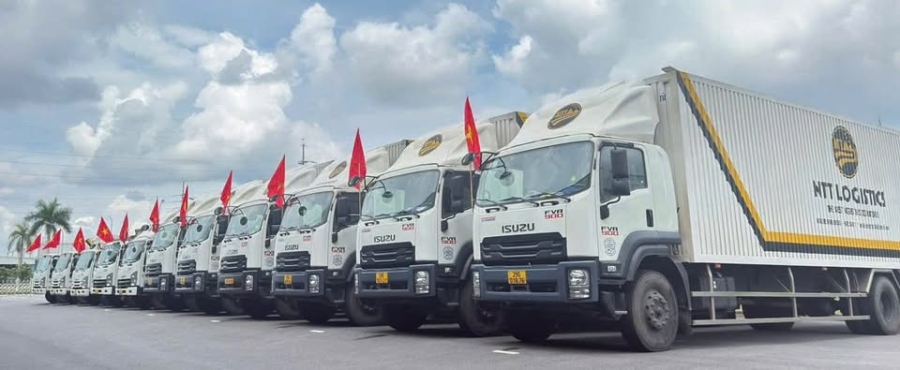
The 2024 Road Traffic Safety Law, with its provision limiting maximum driving time to 48 hours per week, is causing much controversy in the logistics and transportation industry.
In a document sent to the Traffic Police Department of the Ministry of Public Security, the Hanoi Logistics Association argued that, compared to the 56-hour-per-week limit in the EU and 60-70 hours in the US, the regulation in Vietnam is very low. The association warned that this regulation not only affects drivers' income but also reduces transport capacity, drives up freight rates, increases logistics costs, and reduces the competitiveness of the economy.
According to the association's survey, many drivers currently work 60-65 hours a week on short routes, and over 65 hours a week on long routes. Reducing working hours to 48 hours a week puts them at risk of a 20-30% reduction in income.
For transportation businesses, this regulation leads to reduced transportation productivity and pushes freight rates up by 20-25%, which is a significant burden in a context where logistics costs already account for a high percentage of total business expenses.
Furthermore, this regulation was implemented without considering the specific conditions of Vietnamese traffic, such as prolonged traffic congestion. Unforeseen waiting times are also counted as working hours, causing significant difficulties for businesses and drivers. Given the limited transportation infrastructure, this regulation is considered impractical, resulting in a large investment waste for millions of road transport vehicles.
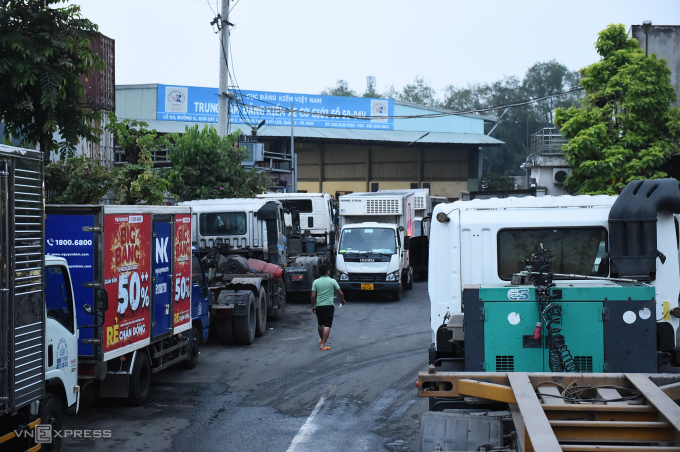
The heavy penalties under Decree 168 have also increased anxiety among drivers. Average incomes are not high, while the fines exceed their ability to pay, causing many drivers to leave the profession, leading to a shortage of manpower and seriously impacting the supply chain.
Given the situation, the Hanoi Logistics Association proposed adjusting driving hours to 65 hours per week, similar to the US and EU countries. At the same time, penalties would only be imposed for exceeding 10% of the time limit stipulated in Decree 168. Driving time would be calculated cumulatively at a minimum speed of 15 km/h to account for the impact of traffic congestion.
Two days earlier, the Vietnam Automobile Transport Association had submitted a petition to the Prime Minister and relevant authorities, emphasizing the persistent traffic congestion on the unsynchronized road network, making compliance with regulations impossible. The proposals included: relaxing the driving time limit from 48 hours to 60 hours per week, adjusting continuous driving time, improving transportation infrastructure, adding rest stops, and implementing digital transformation in administrative management.
The association also proposed increasing investment in highways and installing more rest stops on key routes such as the North-South route, in order to reduce congestion and support drivers in complying with regulations without affecting business operations.
Thi Ha (vnexpress.net)